_11zon.jpeg)

A 2025 analysis comparing exercise types and cortisol found that yoga ranked first for reducing cortisol, while high-intensity interval training trended in the opposite direction.
So the best habit for lowering cortisol may look less intense than the one your stressed brain keeps reaching for.
If you've been doing high-intensity interval training (HIIT) to burn off stress, fasting through the morning, or working around an irregular sleep schedule, your body may be reading those habits as extra load on the same system you're trying to calm.
Quick answer
The best-supported habits for lowering cortisol are consistent sleep timing, morning light exposure, yoga or mind-body movement, slow breathing, and enough recovery between workouts.
The habits most likely to raise cortisol are irregular sleep, chronic high-intensity training without recovery, prolonged fasting under stress, late-night stimulating content, and social isolation. Cortisol responds to total load, so the goal is fewer stacked stress signals across the day.
Here's the practical ranking before the research.
How the HPA axis reads your daily habits
Your body processes physiological and psychological stress through the same channel: the hypothalamic-pituitary-adrenal axis. This is the signaling loop between your brain and adrenal glands that decides when cortisol should rise, how high it should go, and how quickly it should come back down.
The HPA axis reads total load. It doesn't separate a difficult work week from a calorie deficit, a poor night of sleep, or a hard workout.
Cortisol follows a daily rhythm. It rises sharply after waking, declines through the day, and should be low at night. A review on sleep and metabolism explains why that rhythm connects to appetite, glucose regulation, and energy balance.
When that rhythm flattens or stays elevated into the evening, the downstream effects can show up as poor sleep, stronger cravings, blood sugar swings, lower stress tolerance, and slower recovery.
If you want the deeper hormone context, high cortisol in women is a useful starting point.
Worst habits for cortisol
These are ranked by evidence strength and practical impact. Here's where the biggest cortisol load typically comes from.
Irregular sleep timing
Evidence tier: Strong
Total sleep hours matter. Sleep timing is what most people miss
An irregular schedule can disrupt the cortisol awakening response even when you technically get enough hours. Studies of shift workers and altered cortisol slopes show how sleep timing can change the body’s daily cortisol rhythm, and a 2025 paper on night-shift circadian cortisol adjustment reported that fewer than 3% of night-shift workers showed complete adjustment.
Keep wake time boring. A consistent wake time is the highest-impact habit in this article.
Overtraining without recovery
Evidence tier: Strong for exercise type, moderate for overtraining specifically
Exercise raises cortisol for a reason. A short-term spike helps mobilize fuel and meet the physical demand.
The pattern shifts when high-intensity training stacks on top of poor sleep, under-eating, and daily pressure. In the 44-RCT analysis, yoga ranked first for cortisol reduction, while HIIT trended toward increasing cortisol.
For women approaching perimenopause, recovery often matters more than intensity. Hormonal shifts change sleep, muscle recovery, and stress sensitivity, which is why hormone health and weight loss often needs a wider lens than workouts alone.
Recovery changes the signal. Keep strength and cardio, but stop treating exhaustion as proof the workout worked.
Aggressive fasting or meal skipping under chronic stress
Evidence tier: Moderate
Extended fasting is a physiological stressor. When blood glucose drops, your body releases cortisol to mobilize stored glucose from the liver.
A controlled study of 121 women found that low-calorie dieting increased cortisol output. A fasting window isn't automatically harmful. Stress context changes fasting.
If you're sleeping poorly, under sustained pressure, and forcing a long fasting window, protein at breakfast may do more for cortisol than a stricter eating window. This is the same reason cortisol and blood sugar belong in the same conversation.
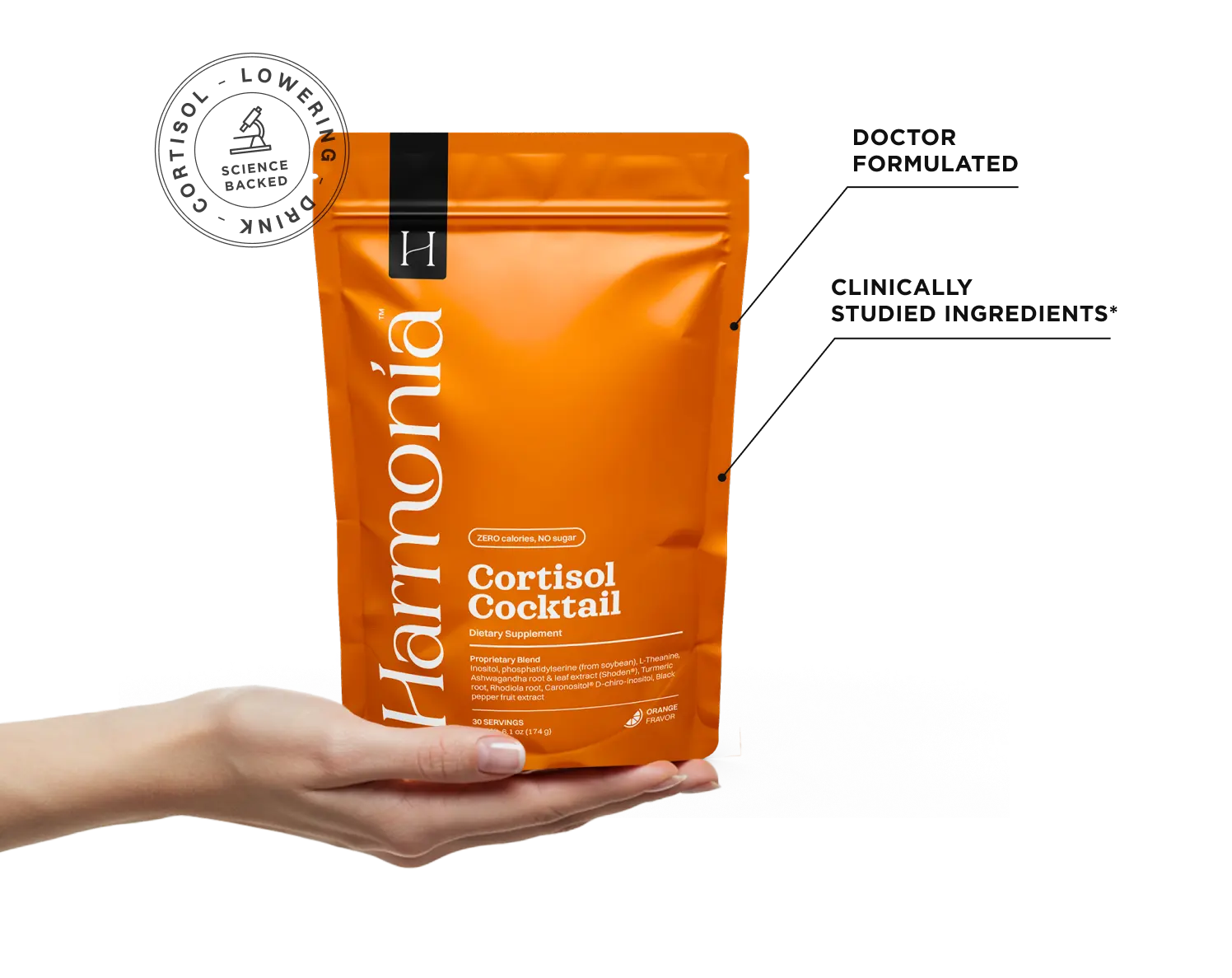
The blood sugar side of this loop is exactly why Harmonia's Cortisol Cocktail includes Myo-Inositol and Chromium. Both support glucose metabolism and insulin sensitivity which are two things that help keep the cortisol-blood-sugar cycle from running in the wrong direction. The formula doesn't replace stable eating patterns. It supports the physiology behind them.
Evening screens and stress-activating content
Evidence tier: Moderate
Late-night phone use affects cortisol through sleep disruption and stress arousal. Blue light pushes sleep timing later, and emotionally activating content keeps your nervous system engaged when it should be winding down.
Research on smartphone use links evening screen exposure with poorer sleep quality. The content matters too. A gentle recipe video is a different body signal than conflict-heavy news or work messages at midnight.
Set a content cutoff, not just a screen cutoff. Your evening cortisol rhythm responds to what you consume mentally.
Chronic social isolation
Evidence tier: Moderate, often underestimated
Loneliness changes threat perception, not just mood.
Research on loneliness and cortisol found links with daily cortisol patterns, and work on social isolation describes the neuroendocrine pathway behind that response. Your brain treats isolation as a safety issue, so the HPA axis stays more alert.
A 10-minute conversation gives your body a real safety signal.
Best habits to lower cortisol naturally
These habits work best when they're boring enough to repeat. Cortisol responds to rhythm more than intensity.
Sleep consistency
Evidence tier: Strong
Consistent sleep timing is the most useful cortisol habit because it anchors the whole day.
Your cortisol awakening response is calibrated by when you wake. If that timing shifts around, cortisol can rise at the wrong strength or linger too long later in the day.
Wake time anchors rhythm. Start with the same time every day, including weekends. Once that's steady, bedtime usually becomes easier to adjust.
Morning light exposure
Evidence tier: Strong
Morning light tells your brain the day has started. That signal shapes the morning cortisol rise and the evening decline.
A study in the Journal of Clinical Endocrinology and Metabolism found that bright morning light immediately elevated cortisol, and a review on light wavelength supports the connection between light exposure and HPA rhythms.
Go outside for 10–30 minutes within the first hour of waking. Before caffeine when possible. Morning light starts the clock.
Yoga and mind-body movement
Evidence tier: Strong
The exercise evidence here is clearer than most people expect.
In the 2025 network meta-analysis, yoga ranked first for cortisol reduction, followed by qigong and moderate continuous aerobic exercise. The estimated dose was around 540 MET-minutes per week, roughly 3 sessions of 55 minutes.
The mechanism is the combination of breath control, parasympathetic activation, and moderate effort. You get a stress-regulating signal without the cortisol demand of high-intensity work.
KSM-66 Ashwagandha and Rhodiola Rosea work on the same stress-response pathways that yoga and recovery are trying to retrain. Both are in Harmonia's Cortisol Cocktail specifically for HPA axis signaling and stress resilience. If you're already doing the movement side, the formula supports the system behind it from a different angle.
_11zon.jpeg)
Slow breathwork
Evidence tier: Moderate-strong
Slow breathing is one of the few habits that can shift stress physiology within a single session.
A review on HPA axis interventions supports the role of mindfulness-based practices in stress regulation, and a 2025 breathwork review found reductions in stress and anxiety. Slow-paced breathing works partly by increasing parasympathetic activity through the vagus nerve.
Use 5 minutes at 5–6 breaths per minute. A simple pattern: 4 counts in, 6 counts out. Five minutes is enough.
High cardiorespiratory fitness over time
Evidence tier: Strong, observational and longitudinal
One workout doesn't lower your long-term cortisol pattern. Fitness built steadily over months can.
Research on cardiorespiratory fitness found that higher fitness was linked with lower daily cortisol output. Moderate, repeatable movement trains your stress system to respond more proportionately and recover faster.
Brisk walking, cycling, swimming, hiking: any steady activity you can repeat without a recovery crisis after. Repeatable movement trains recovery.
Where the habit backfires
Doing HIIT to burn off stress
HIIT creates an acute cortisol spike, which is normal in isolation. When recovery is poor, the weekly load can become too high. Add yoga, qigong, or zone 2 cardio before adding more intensity.
Fasting through a high-stress morning.
If your morning starts with poor sleep, caffeine, and pressure, skipping food can push blood sugar lower and cortisol higher. A protein-rich breakfast is often the steadier move. If nighttime hunger is part of the pattern, it may be a restriction issue, a sleep issue, or a blood sugar issue, not a willpower issue.
Treating sleep hours as enough
Seven to 9 hours matters, but rhythm matters too. A consistent wake time gives your cortisol rhythm a clearer anchor than a different sleep window every night.
Treating social contact as optional
Social connection works through a different pathway than food or exercise. Your stress system responds to safety cues, and regular human contact is one of them.
Expecting supplements to carry the load that habits should carry
Magnesium, adaptogens, and electrolytes support stress resilience, but they work best alongside sleep, recovery, and stable fuel. The adrenal cocktail conversation makes most sense in a nutrition-support context, not as a stand-alone fix.
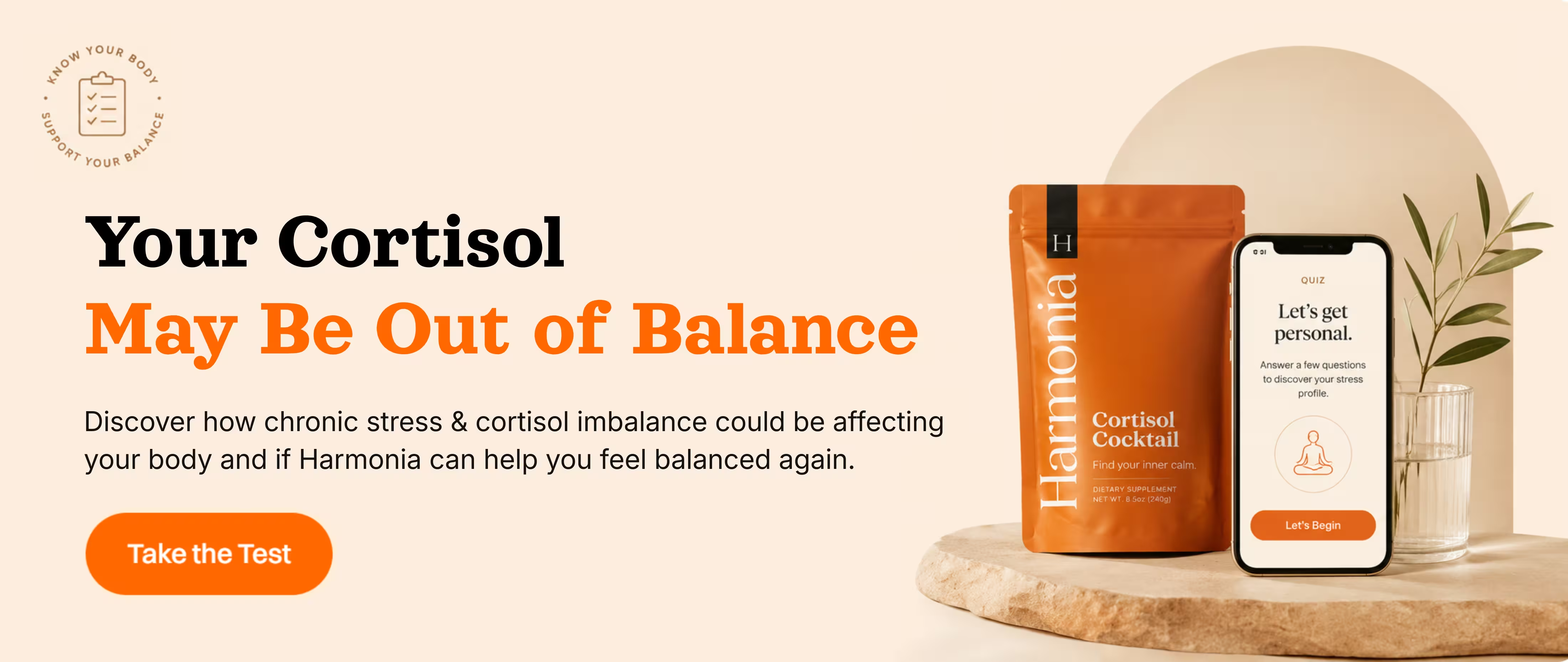
You know your habits better than any formula does. If the load feels like sleep, food timing, movement, and stress recovery are already reasonably in place and something still feels off, take the Harmonia quiz to see whether the Harmonia Cortisol Cocktail fits where you are right now.
.png)
Where supplement support fits
Supplement support belongs after the main load is visible. Sleep timing, food timing, movement, light, and recovery decide how much demand your stress system faces each day.
Ingredients like Magnesium, L-Theanine, and Phosphatidylserine support the same system from a different angle. Magnesium is tied to nervous system signaling and stress response, which is why magnesium and cortisol is worth reading if tension, poor sleep, or low dietary intake are part of the picture.
KSM-66 Ashwagandha works on HPA-axis signaling directly, which is why it sits alongside L-Theanine, Rhodiola Rosea, Magnesium, Myo-Inositol, and B vitamins in the Harmonia Cortisol Cocktail.
Each ingredient targets a specific part of the system this article keeps returning to: stress signaling, nervous-system calm, sleep support, and blood sugar steadiness. The formula supports the physiology behind the habits, not a replacement for them.
Conclusion
Your cortisol rhythm is built from repeated signals. Wake time, light, food, training, recovery, and connection all count.
Start by removing the habit of adding the most load. For many women that's inconsistent sleep timing, too much intensity without recovery, or a long fasting window during an already stressful season. Start with the biggest load.
Frequently asked questions
What is the single most effective habit for lowering cortisol?
Sleep consistency, especially the same wake time every day. Your cortisol awakening response is calibrated by timing, not only total sleep hours. A steady wake time gives your body a clearer morning signal and usually helps evening cortisol come down more predictably.
Is HIIT bad for cortisol?
HIIT raises cortisol acutely, which is normal when recovery is strong. The issue is frequent HIIT stacked on poor sleep, under-eating, and chronic psychological stress. The weekly recovery pattern is what decides whether it helps or adds load.
Does social media raise cortisol?
Emotionally activating content can keep the stress response engaged, especially at night. The body needs low evening cortisol for sleep quality, so conflict-heavy news, work messages, and comparison-heavy scrolling can work against that rhythm. Neutral or calming content has a different physiological effect.
How long does it take to lower cortisol naturally?
Some habits shift how you feel the same day, like breathing, sunlight, and food timing. A more stable cortisol rhythm takes weeks because the body responds to repeated signals, not single events. Sleep consistency and recovery are the habits that make the other changes land.
What is the best morning routine for cortisol balance?
Same wake time, then 10–30 minutes of natural light within the first hour. Delay caffeine 60–90 minutes if it makes you feel wired or anxious. Add protein at breakfast if you tend to crash or crave sugar by mid-morning.
References
- Li, X., et al. (2025). The optimal exercise modality and dose for cortisol reduction in psychological distress: A systematic review and network meta-analysis. Sports. Link
- Balbo, M., Leproult, R., & Van Cauter, E. (2010). Impact of sleep and its disturbances on hypothalamo-pituitary-adrenal axis activity. International Journal of Endocrinology. Link
- Niu, S. F., Chung, M. H., Chen, C. H., Hegney, D., O'Brien, A., & Chou, K. R. (2011). The effect of shift rotation on employee cortisol profile, sleep quality, fatigue, and attention level: A systematic review. Journal of Nursing Research, 19(1), 68-81. Link
- Andreadi, A., et al. (2025). Modified cortisol circadian rhythm: The hidden toll of night-shift work on metabolic and cardiovascular health. International Journal of Molecular Sciences, 26(5), 2090. Link
- Tomiyama, A. J., Mann, T., Vinas, D., Hunger, J. M., Dejager, J., & Taylor, S. E. (2010). Low calorie dieting increases cortisol. Psychosomatic Medicine, 72(4), 357-364. Link
- AlShareef, S. M. (2022). The impact of bedtime technology use on sleep quality and excessive daytime sleepiness in adults. Sleep Science and Practice. Link
- Doane, L. D., & Adam, E. K. (2010). Loneliness and cortisol: Momentary, day-to-day, and trait associations. Psychoneuroendocrinology, 35(3), 430-441. Link
- Campagne, D. M. (2019). Stress and perceived social isolation: Effects from psychological and biological mechanisms. Journal of Clinical Medicine, 8(8), 1135. Link
- Leproult, R., Colecchia, E. F., L'Hermite-Baleriaux, M., & Van Cauter, E. (2001). Transition from dim to bright light in the morning induces an immediate elevation of cortisol levels. The Journal of Clinical Endocrinology & Metabolism, 86(1), 151-157. Link
- Choi, K., et al. (2023). Effects of light wavelength and timing on circadian rhythm and hypothalamic-pituitary-adrenal axis activity. Link
- Harris, D. J., et al. (2024). Mindfulness-based and related interventions for stress regulation and hypothalamic-pituitary-adrenal axis function. Link
- Fincham, G. W., Strauss, C., Montero-Marin, J., & Cavanagh, K. (2023). Effect of breathwork on stress and mental health: A meta-analysis of randomized controlled trials. Scientific Reports, 13, 432. Link
- Heaney, J. L. J., Carroll, D., & Phillips, A. C. (2014). Physical activity, life events stress, cortisol, and DHEA: Preliminary findings that physical activity may buffer against the negative effects of stress. Link