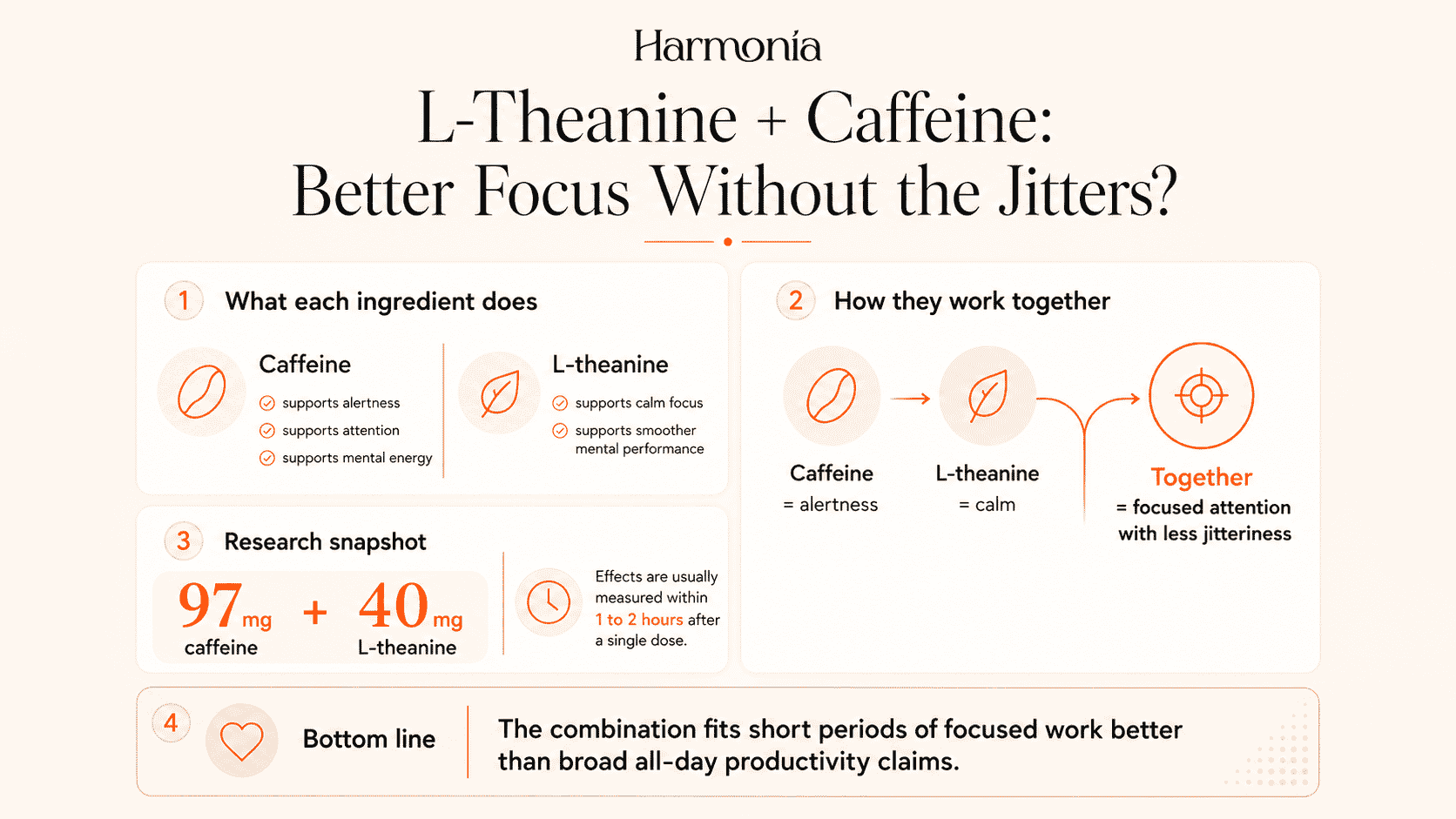
L-theanine and caffeine are often paired because they do complementary jobs. Caffeine increases alertness, while L-theanine has been studied for a calmer, more settled style of attention.
Together, the combination has human evidence for better task switching and resistance to distraction during demanding mental work. A 2025 systematic review and meta-analysis of randomized trials found small-to-moderate benefits across several short-term attention and mood measures, with many effects appearing within the first 2 hours.
That pairing is especially useful if coffee helps you wake up and concentrate but sometimes leaves you feeling too wired. The strongest human evidence is for short-term attention, where the combination can make focus feel steadier and easier to direct. The effect on jitters is more individual and depends heavily on how much caffeine you use.
What happens when you take L-theanine and caffeine together?
L-theanine and caffeine can support short-term attention while keeping the alerting effect of caffeine intact. Human trials have reported improvements in task switching, alertness, staying accurate around distractions, and several other attention measures.
How do L-theanine and caffeine affect alertness differently
Caffeine raises alertness by blocking adenosine, a brain signal that builds sleepiness as the day goes on. L-theanine is an amino acid found mainly in tea and has been studied for relaxed attention and does not act as a stimulant.
How caffeine increases alertness
Caffeine can improve wakefulness and attention fairly quickly. Its effect also depends heavily on dose and sensitivity, which is why the FDA notes that higher intake can cause jitters, anxiety, palpitations, and sleep disruption in some people.
If a moderate amount of caffeine already helps you feel more awake, L-theanine is usually added to make that focus feel calmer and steadier.
What L-theanine may add
L-theanine has its own evidence for calm attention. A 2026 meta-analysis of 31 randomized trials found that a single 200 mg dose improved choice reaction time, which reflects how quickly someone responds when selecting between options during an attention task.
L-theanine is useful in this pairing because it can support attention without acting as another stimulant. That lets it complement caffeine when you want alertness with a calmer, steadier feel.
Those effects also appear when L-theanine is used on its own. Human research on L-theanine for calm focus and stress helps explain why it can complement caffeine without relying on caffeine for its calming effect.
Do L-theanine and caffeine improve focus?
Yes. Human trials show that L-theanine and caffeine can improve short-term attention, especially task switching and accuracy when distractions are present. Some studies also report greater alertness.

Task switching and resistance to distraction
In a randomized crossover trial of 27 healthy adults, 100 mg L-theanine plus 50 mg caffeine improved speed and accuracy during task switching at 60 minutes. The same combination also made participants less susceptible to distracting information during a memory task.
For work that requires you to move between priorities without losing your place, that kind of task-switching benefit is practical. The study used a measured caffeine dose, which gives a cleaner picture than trying to estimate the effect from coffee alone.
Alertness and mental fatigue
A separate trial in 44 young adults found that 97 mg L-theanine with 40 mg caffeine improved task-switching accuracy and self-rated alertness. Participants also reported less tiredness after the combination.
The study points to a short focus window where the pairing may help you stay alert and mentally engaged with less perceived tiredness.
What the broader evidence says
The 2025 systematic review and meta-analysis of 50 randomized controlled trials included 15 studies in at least one pooled analysis. Across studies of the combination, L-theanine plus caffeine improved several short-term measures of attention and mood compared with placebo.
Most combination trials tested a single dose and measured performance within 1 to 2 hours. The evidence fits defined periods of focused work better than broad claims about all-day productivity.
Is L-theanine with caffeine better than caffeine alone?
Yes, on some attention tasks. Caffeine provides much of the alerting effect, and adding L-theanine has improved reaction time and accuracy, with some trials also reporting better task switching.
In a 2008 crossover study, 250 mg L-theanine with 150 mg caffeine improved several reaction-time and accuracy measures. Caffeine alone also helped on some tasks, so the added benefit of L-theanine appears to depend on the amount used and the type of attention being tested.
A lower-dose 2015 trial found that 75 mg caffeine improved attention and mood, while adding 50 mg L-theanine did not produce an extra measurable behavioral benefit under that protocol.
In practice, start with a caffeine amount that already works for you. L-theanine is most useful when you want to see whether that alertness feels calmer and easier to direct.
Does L-theanine reduce caffeine jitters?
L-theanine can soften part of caffeine's physical stress response, which may help the combination feel calmer for some people. Human trials have measured attention and blood-pressure effects more consistently than lower self-reported jitter ratings.
In 48 healthy adults, 250 mg caffeine increased alertness and jitteriness, along with blood pressure. Adding 200 mg L-theanine reduced the caffeine-related rise in blood pressure, although jitter ratings were similar.
The most practical approach is to pair L-theanine with a caffeine amount you already tolerate well. If coffee consistently causes a racing heart or strong anxiety, lowering the caffeine dose is the more reliable first adjustment.
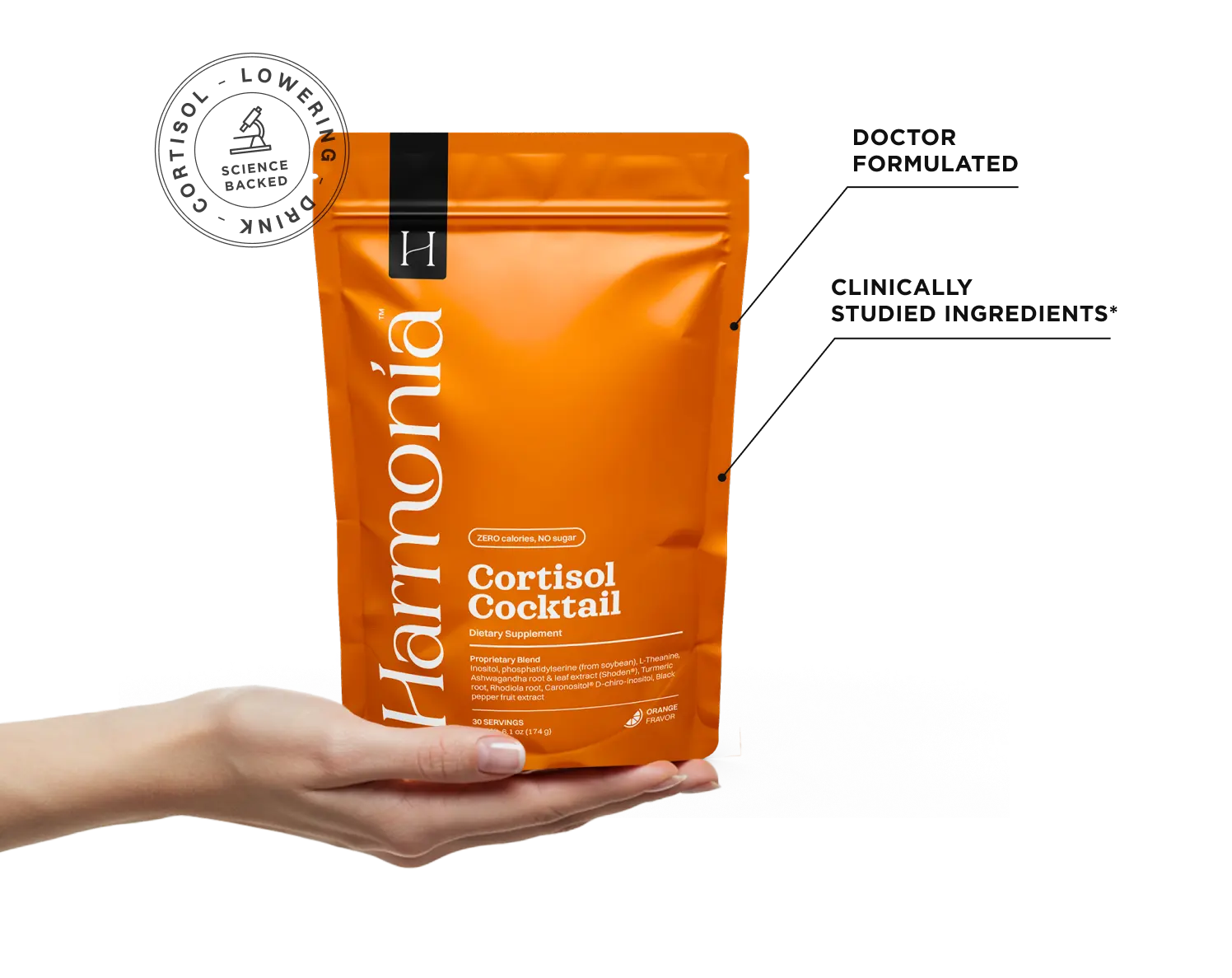
If you like L-theanine’s calm-focus role but don’t always want to pair it with caffeine, the Harmonia Cortisol Cocktail uses L-theanine in a caffeine-free formula alongside KSM-66 ashwagandha, Rhodiola rosea, magnesium, and inositols for broader stress and hormone support.
L-theanine and caffeine doses used in human studies
A 2:1 L-theanine-to-caffeine ratio is a useful research-based reference point because several successful trials used amounts close to it. Positive results have also appeared at other ratios, so the ratio matters less than keeping caffeine within an amount you tolerate well.
These study protocols show the range researchers have tested. They are not personal dosing instructions. Sleep, usual caffeine intake, medications, pregnancy, and individual sensitivity can all change how the same combination feels.
Can you take L-theanine with coffee?
Yes. Coffee can provide the caffeine side of the pairing, while L-theanine is usually added separately because coffee contains little meaningful L-theanine.
Most clinical trials used measured caffeine. A normal cup of coffee is less predictable because caffeine content changes with serving size and brewing method, so keeping your usual coffee amount consistent makes it easier to judge whether adding L-theanine changes your focus or how wired you feel.
The caffeine and cortisol relationship also matters because dose and timing can feel very different when stress and sleep are already strained.
Does coffee contain L-theanine?
Tea from Camellia sinensis is the main dietary source of L-theanine. An analysis of 37 commercial tea samples found measurable L-theanine across white, green, oolong, and black teas, with substantial variation between products.
In practice, your coffee supplies the caffeine. L-theanine usually comes from tea or a measured supplement because coffee contains very little of it.
Should you take L-theanine before, with, or after coffee?
Taking L-theanine and caffeine together is the approach most directly tested in human trials. Studies have not shown a clear advantage to taking L-theanine 20 or 30 minutes before coffee instead.
If you are testing the pairing for yourself, keep the coffee serving and time of day consistent. Changing several variables at once makes it harder to tell what is helping.

How long do L-theanine and caffeine take to work?
Most combination studies detected attention effects within about 20 to 90 minutes after dosing. That timing makes the pairing most relevant when you want support around a defined period of focused work or study.
The Owen trial measured performance at 60 and 90 minutes, while the Giesbrecht trial tested participants at 20 and 70 minutes. Food intake, sleep, habitual caffeine use, and individual metabolism can shift when you notice the effect.
What are the side effects of combining L-theanine and caffeine?
L-theanine is generally well tolerated in human research, while caffeine is usually what limits the combination. The most common practical issues come from too much caffeine for your own tolerance, including jitters, anxiety, headache, stomach upset, palpitations, or trouble sleeping.
Caffeine sensitivity and sleep
For most adults, the FDA cites 400 mg of caffeine per day as an amount not generally associated with negative effects. Some people feel anxious or lose sleep at much lower amounts, so your own response still matters.
In a small 2023 crossover study in healthy young women, 30 mg caffeine increased wakefulness after falling asleep, and that increase was not seen when 50 mg L-theanine was added. Other sleep measures were similar, so caffeine timing still matters if you are using the pairing later in the day.
The evidence on L-theanine for sleep is most useful when you are deciding whether L-theanine fits an evening routine. Caffeine timing still needs to protect your sleep.
Pregnancy, medications, and other reasons for caution
Pregnancy changes the caffeine limit. ACOG states that moderate caffeine intake below 200 mg per day does not appear to be a major contributor to miscarriage or preterm birth.
If you are pregnant, breastfeeding, taking prescription medication, or managing a cardiovascular condition, review caffeine and supplemental L-theanine with your clinician. Extra care also makes sense if caffeine regularly causes strong palpitations, panic-like symptoms, or persistent insomnia.
Where L-theanine fits in Harmonia
_11zon.jpeg)
L-theanine plays a specific role in the Harmonia Cortisol Cocktail: supporting calm, focused attention without adding caffeine. That makes it a useful fit for people who want the steadier-focus benefits discussed above without increasing their stimulant intake.
The Harmonia Cortisol Cocktail ingredient list combines L-theanine with KSM-66 ashwagandha, Rhodiola rosea, magnesium, phosphatidylserine, and inositols. Rather than asking L-theanine to do everything, the formula uses ingredients with complementary roles across stress, mental fatigue, nervous-system function, and metabolic and hormone signaling.
Within that formula, L-theanine's contribution is straightforward: calm attention. It provides a caffeine-free way to support focus while the other ingredients address different aspects of the stress response. For a closer look at how those ingredients fit together, see the evidence on supplements for cortisol support.
The bottom line
L-theanine and caffeine are a useful pairing when you want alertness with a calmer style of focus. Human trials support benefits for task switching and staying accurate around distractions, with many effects showing up within the first 1 to 2 hours.
A 2:1 ratio is a sensible research reference point, but your caffeine tolerance matters more than chasing a perfect formula. Start with a caffeine amount you already handle well, then judge whether adding L-theanine gives you the steadier focus you want.
If you want L-theanine without adding more caffeine to your routine, the Harmonia Cortisol Cocktail uses L-theanine for calm-focus support in a caffeine-free formula. The formula also includes KSM-66 ashwagandha for stress and cortisol support, Rhodiola rosea for stress-related fatigue, magnesium for normal nervous-system function, and inositols involved in insulin and hormone signaling.
If caffeine helps your focus but stress, sleep, energy, or hormone-related symptoms keep showing up elsewhere, you can take the Harmonia quiz to see whether the Cortisol Cocktail fits what you are experiencing.
Frequently asked questions
Can you take L-theanine and caffeine together?
Yes. Randomized human trials show that taking L-theanine with caffeine can improve task switching and accuracy around distractions, with some trials also reporting greater alertness. The strongest evidence is for short-term use when you want a defined period of focused attention.
What is the best ratio of L-theanine to caffeine?
A 2:1 L-theanine-to-caffeine ratio is a reasonable research-based reference point. Positive trials have also used ratios above and below 2:1, so personal caffeine tolerance still matters.
Does L-theanine reduce caffeine jitters?
L-theanine can give caffeine a calmer feel for some people. One controlled trial found that adding L-theanine reduced the caffeine-related rise in blood pressure, although jitter ratings were similar. If caffeine regularly makes you shaky or anxious, lowering the caffeine dose is the more reliable first step.
Can you take L-theanine with coffee?
Yes. Coffee can supply the caffeine, and L-theanine can be taken alongside it. Because coffee strength varies, keeping your serving consistent makes it easier to judge how the combination feels.
Does coffee naturally contain L-theanine?
Coffee contributes little meaningful L-theanine. Tea from Camellia sinensis is the main natural dietary source, while supplements provide a measured amount.
Should you take L-theanine before or with caffeine?
Taking them together is the best-studied approach. Human trials commonly give both at the same time before attention testing, and research has not established a benefit to separating the doses.
Can L-theanine make you sleepy even with caffeine?
It can feel relaxing, but L-theanine is generally studied for calm attention and usually does not cause heavy sedation. If you feel unusually drowsy, review the amount and timing, along with any other supplements or medications you are using.
Can you take L-theanine and caffeine every day?
Yes, some people use the pairing daily, and the main practical limit is usually your total caffeine intake. Pay attention to sleep quality and sensitivity, especially if you take medication, are pregnant or breastfeeding, or regularly use other sources of caffeine.
References
- Payne ER, Aceves Martins M, Dubost J, Greyling A, de Roos B. 2025. Effects of Tea (Camellia sinensis) or its Bioactive Compounds L-Theanine or L-Theanine plus Caffeine on Cognition, Sleep, and Mood in Healthy Participants: A Systematic Review and Meta-Analysis of Randomized Controlled Trials. Nutrition Reviews, 83(10), 1873-1891. Link
- Gerolymos C, Saddier E, Boyer L, Fond G. 2026. Cognitive and affective effects of L-Theanine: A systematic review and meta-analysis of 31 randomized trials. Molecular Psychiatry. Advance online publication. Link
- Owen GN, Parnell H, De Bruin EA, Rycroft JA. 2008. The combined effects of L-theanine and caffeine on cognitive performance and mood. Nutritional Neuroscience, 11(4), 193-198. Link
- Giesbrecht T, Rycroft JA, Rowson MJ, De Bruin EA. 2010. The combination of L-theanine and caffeine improves cognitive performance and increases subjective alertness. Nutritional Neuroscience, 13(6), 283-290. Link
- Haskell CF, Kennedy DO, Milne AL, Wesnes KA, Scholey AB. 2008. The effects of L-theanine, caffeine and their combination on cognition and mood. Biological Psychology, 77(2), 113-122. Link
- Dodd FL, Kennedy DO, Riby LM, Haskell-Ramsay CF. 2015. A double-blind, placebo-controlled study evaluating the effects of caffeine and L-theanine both alone and in combination on cerebral blood flow, cognition and mood. Psychopharmacology, 232(14), 2563-2576. Link
- Rogers PJ, Smith JE, Heatherley SV, Pleydell-Pearce CW. 2008. Time for tea: Mood, blood pressure and cognitive performance effects of caffeine and theanine administered alone and together. Psychopharmacology, 195(4), 569-577. Link
- Kahathuduwa CN, Dassanayake TL, Amarakoon AMT, Weerasinghe VS. 2017. Acute effects of theanine, caffeine and theanine-caffeine combination on attention. Nutritional Neuroscience, 20(6), 369-377. Link
- Boros K, Jedlinszki N, Csupor D. 2016. Theanine and caffeine content of infusions prepared from commercial tea samples. Pharmacognosy Magazine, 12(45), 75-79. Link
- Baba Y, Takihara T, Okamura N. 2023. Theanine maintains sleep quality in healthy young women by suppressing the increase in caffeine-induced wakefulness after sleep onset. Food & Function, 14(15), 7109-7116. Link
- U.S. Food and Drug Administration. 2024. Spilling the Beans: How Much Caffeine is Too Much? Link
- American College of Obstetricians and Gynecologists. 2010, reaffirmed 2026. Moderate Caffeine Consumption During Pregnancy. Committee Opinion No. 462. Link