_11zon.jpeg)

There’s a reason you crave salt, fat, and sugar when you’re stressed. The biology is specific. Food can either add to that stress load or help your body come back down.
Most cortisol food advice is too blunt. Coffee, sugar, salmon, dark chocolate, green tea, and magnesium-rich foods don’t affect cortisol in the same way, at the same dose, or on the same timeline.
The useful question is whether your daily pattern is keeping your blood sugar, gut, inflammation, and stress system in a steadier range.
If cortisol feels tangled up with appetite, belly weight, sleep, and energy, you’re usually looking at more than food alone. The overlap between cortisol and blood sugar is one of the clearest places to start, because glucose swings can keep pulling your stress hormones back into the conversation.
Quick answer
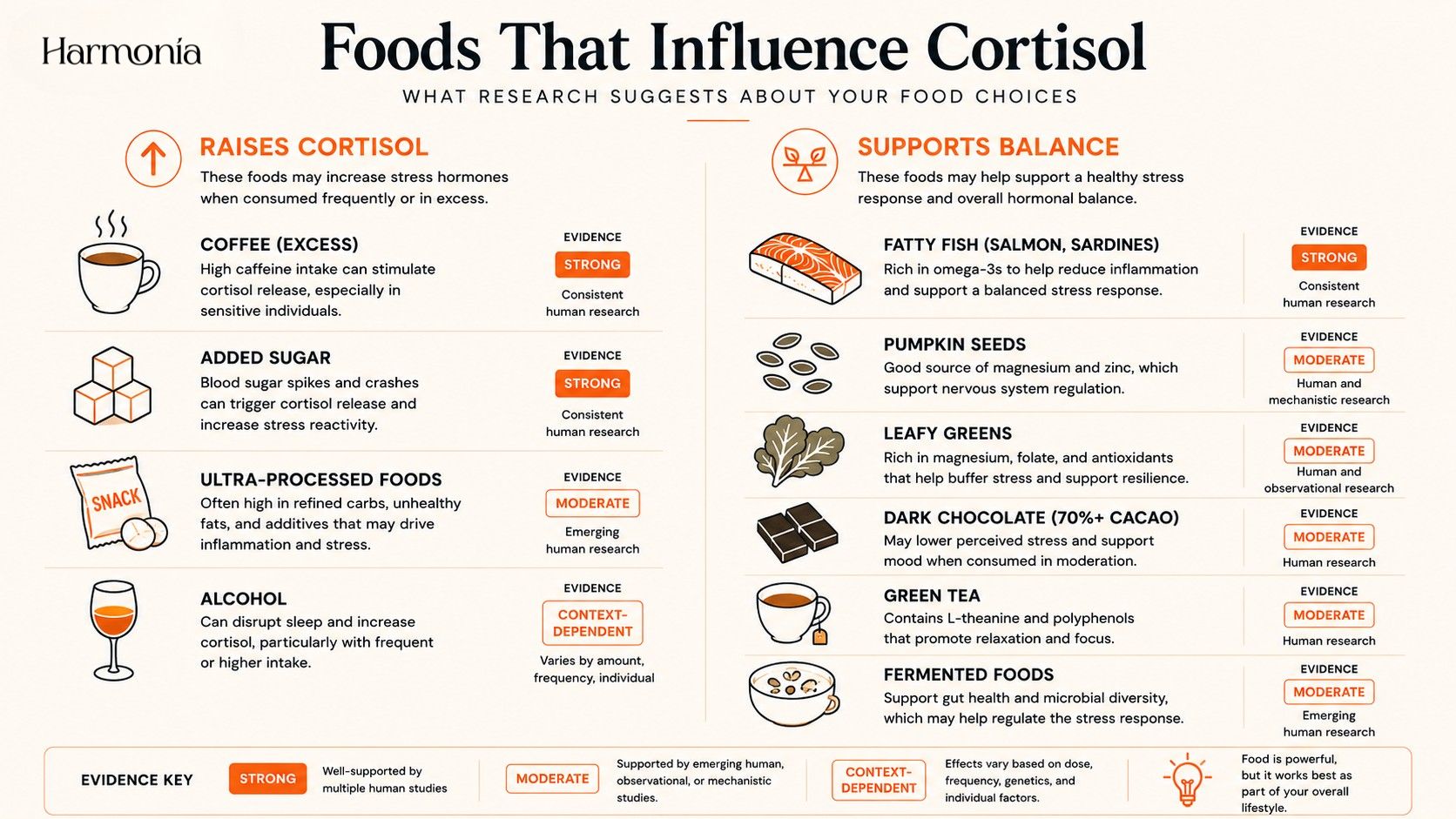
The foods that lower cortisol most consistently are fatty fish rich in omega-3s, magnesium-rich whole foods, high-polyphenol dark chocolate, green tea or L-Theanine, fermented foods, and fiber-rich plants.
The foods most likely to raise cortisol are caffeine at the wrong time, repeated high-sugar meals, frequent ultra-processed foods, and alcohol patterns that disrupt sleep.
Pattern matters more than one meal. A single coffee or dessert is rarely the issue. A daily rhythm that keeps blood sugar unstable, inflammation higher, and sleep lighter gives cortisol more reasons to stay active.
Cortisol impact at a glance
Why food affects cortisol
Cortisol does more than respond to stress. It helps your body mobilize fuel, maintain blood sugar, regulate inflammation, and follow a daily rhythm that should rise in the morning and fall at night.
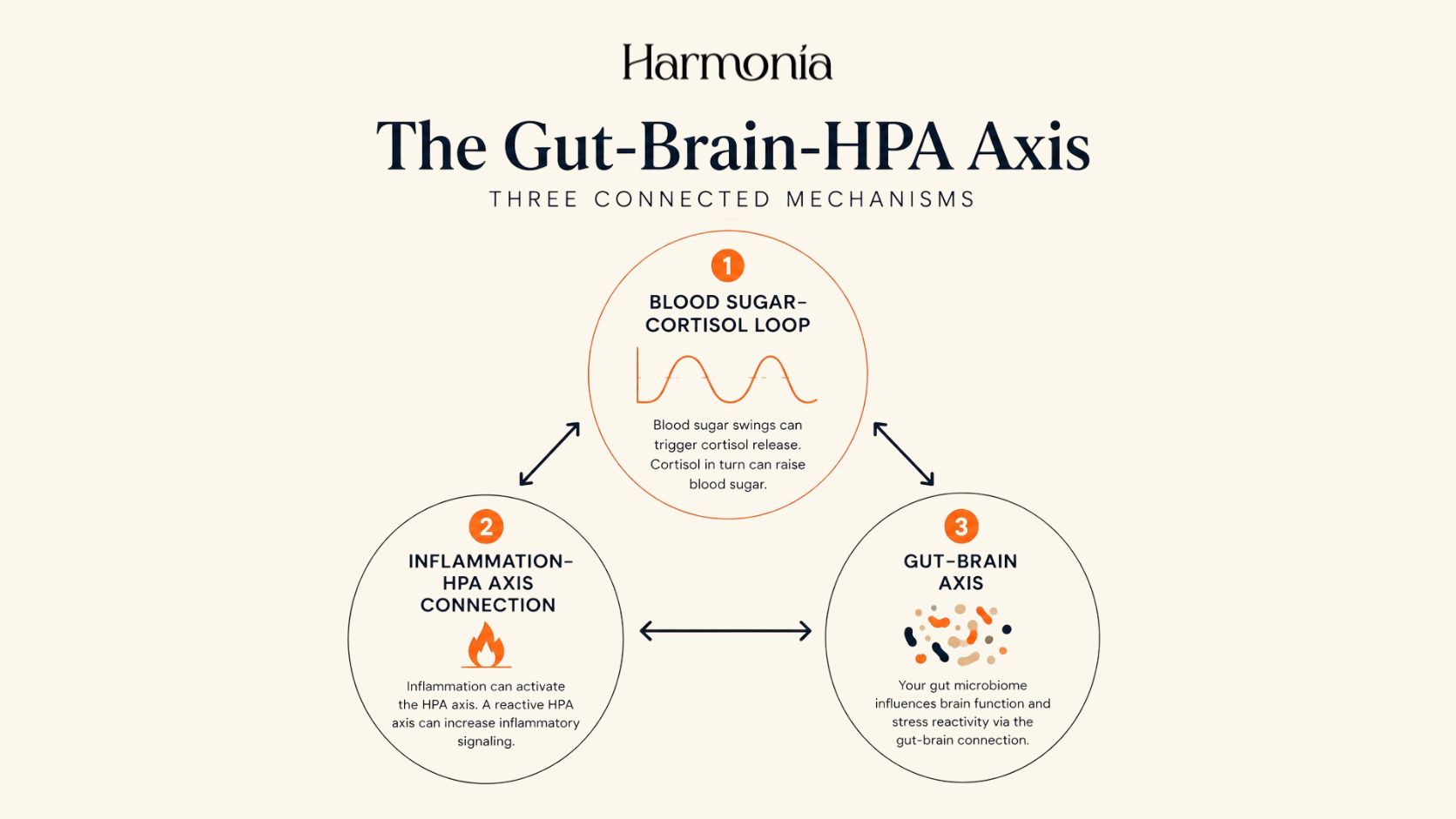
Food can shift that rhythm through three main pathways.
The blood sugar-cortisol loop
When blood glucose drops quickly, your body reads it as a stress signal. Cortisol rises to help pull stored glucose from the liver so your brain still has fuel.
That’s why high-glycemic meals can become a cortisol issue after the crash, not just during the spike. Steadier meals reduce emergencies: protein, fiber, and fat give your stress system fewer glucose dips to rescue.
The inflammation-HPA axis connection
The HPA axis is the brain-adrenal signaling loop that controls much of your cortisol response. Chronic low-grade inflammation can keep that loop more active than it needs to be.
Research on ultra-processed foods and inflammation helps explain why food pattern matters more than one ingredient. Diets built around refined carbohydrates, low fiber, and frequent ultra-processed foods tend to create more inflammatory pressure on the same system that regulates cortisol.
The gut-brain-HPA axis
Your gut microbiome talks to your stress system. The gut-brain axis helps shape how reactive the HPA axis becomes under stress.
Research on gut microbiota and the HPA axis shows why fiber, fermented foods, and polyphenol-rich foods belong in this conversation. They support microbial diversity, and microbial diversity appears to help the stress response stay less reactive.
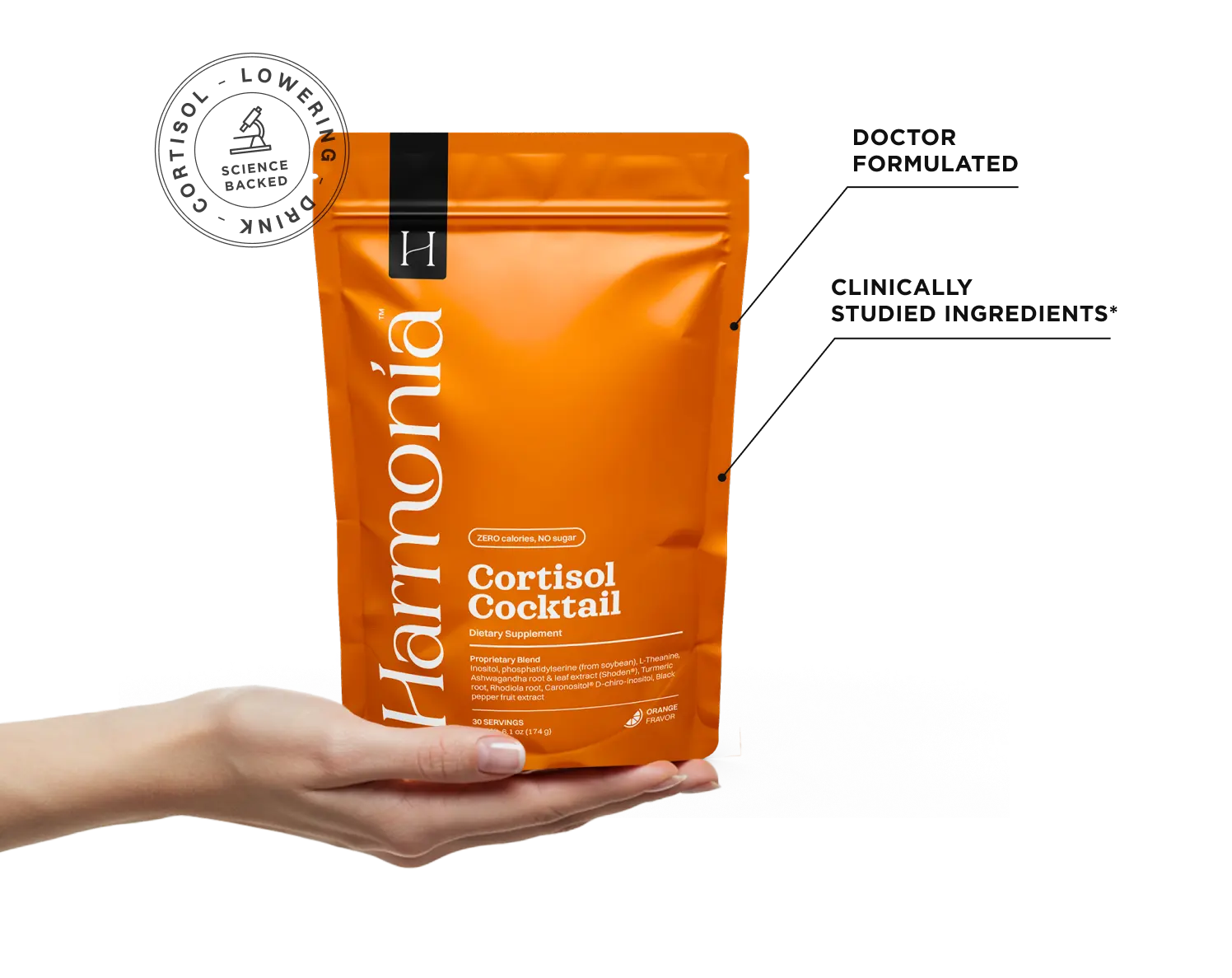
When your meals are already doing the basics, steadying glucose, adding magnesium-rich foods, and supporting the gut, Harmonia’s Cortisol Cocktail works on the stress side of that same loop.
KSM-66 Ashwagandha is included for HPA-axis stress signaling. L-Theanine helps soften stress reactivity. Magnesium supports nervous-system regulation, while Myo-inositol helps with blood-sugar steadiness.
Food still comes first. Harmonia fits when your eating pattern is already trying to steady the same systems your stress response keeps pulling on.
Foods that raise cortisol
Caffeine: high impact, context-dependent
Caffeine has the clearest short-term effect on cortisol, especially when your body isn’t used to it. In a controlled study of 96 healthy adults, repeated 250 mg caffeine doses raised salivary cortisol across the day.
Daily caffeine drinkers had a smaller response than non-habitual users, but the response didn’t disappear completely. Timing still matters.
Cortisol naturally rises after waking, and caffeine can add more stimulation when you drink it during that morning peak. Afternoon and evening caffeine can also push against the time of day when cortisol should be declining.
Evidence tier: Strong, with multiple human caffeine studies.
Practical note: Delay your first cup 60–90 minutes after waking. Cut caffeine after early afternoon if you struggle with wired-tired evenings, light sleep, or 2 a.m. wakeups.
Added sugar and refined carbohydrates: high chronic impact
The cortisol and sugar relationship is more complicated than most wellness lists make it sound. Real-world research on dietary sugar and cortisol reactivity suggests acute sugar intake can temporarily blunt cortisol reactivity, which helps explain why stress eating can feel soothing in the moment.
The chronic problem is the pattern after that moment. High-glycemic meals push blood sugar up, then down, and the drop asks cortisol to help bring glucose back up again.
Your body can handle dessert. It has a harder time with a daily pattern of sweet coffee, low-protein breakfast, long gaps without food, and late-night sugar after a stressful day.
Evidence tier: Moderate, with human data plus strong blood sugar mechanisms.
Practical note: Pair carbohydrates with protein, fat, and fiber. That one change often does more for cortisol stability than simply trying to cut sugar harder.
These same blood sugar and hunger patterns show up in nighttime eating, especially when evening cravings are really a mix of stress, restriction, and poor daytime fueling.
Ultra-processed foods: high chronic impact
Ultra-processed foods tend to stack several cortisol-related inputs at once: refined carbohydrates, low fiber, low micronutrient density, high palatability, and inflammatory pressure.
Research on ultra-processed foods and the gut connects frequent intake with changes in microbial diversity and intestinal barrier function. The gut and HPA axis keep signaling to each other.
The food itself carries no moral weight. Frequency is the issue. A packaged snack during a busy week doesn’t carry the same cortisol footprint as a daily pattern where most meals are built from ultra-processed foods.
Evidence tier: Moderate, with strong observational data and clear mechanisms.
Practical note: Replace one frequent ultra-processed anchor first. Breakfast and afternoon snacks are usually the easiest places to stabilize blood sugar without overhauling your life.
Alcohol: moderate impact
Alcohol affects cortisol mostly through sleep and recovery. A review on alcohol and the sleeping brain describes how heavier or repeated alcohol exposure disrupts sleep quality, and poor sleep is one of the fastest ways to disturb next-day cortisol rhythm.
This is dose- and pattern-dependent. An occasional drink with food is physiologically different from alcohol most nights, especially close to bed.
Evidence tier: Moderate, with human sleep data and stress-system mechanisms.
Practical note: If you’re tracking cortisol symptoms, watch how alcohol affects sleep depth, night waking, and next-day cravings. The next morning often tells you more than the night itself.
Foods that support cortisol balance
Fatty fish and omega-3s: strongest dietary evidence
Omega-3 cortisol research is strongest when EPA and DHA are studied at meaningful doses. These fats are found in salmon, sardines, mackerel, anchovies, trout, and some fish oil supplements.
A randomized trial of 2.5 g/day omega-3 found lower overall cortisol and IL-6 compared with placebo. That’s relevant because IL-6 is an inflammatory signal that can keep the HPA axis more activated.
A smaller fish oil trial using a lower EPA and DHA dose also reported lower basal cortisol across the day. The pattern points in the same direction: omega-3s appear to support cortisol regulation by lowering inflammatory signaling, not by sedating the stress response.
Evidence tier: Strong, with multiple human trials.
Dose note: Most consistent effects show up around 1.25–2.5 g EPA and DHA daily in supplement trials. For food, that usually means fatty fish several times per week.
Magnesium-rich foods: strongest when intake is low
Magnesium sits close to the stress signal itself. It helps regulate nervous-system excitability and appears to act as a brake on parts of the HPA axis.
Low magnesium can amplify stress, which is why magnesium-rich foods belong in a cortisol-supportive eating pattern.
A review on magnesium and stress describes a feedback loop: stress can increase magnesium loss, and low magnesium can make the stress response more reactive. That loop is one reason magnesium conversations are more than a wellness trend.
Food sources with meaningful magnesium include pumpkin seeds, chia seeds, almonds, cashews, spinach, black beans, lentils, edamame, avocado, and dark chocolate with higher cacao content.
Evidence tier: Strong for low intake or deficiency, moderate for people already meeting needs.
Practical note: Build magnesium into meals before assuming you need a supplement. Seeds, legumes, and leafy greens are the easiest upgrades.
Dark chocolate, 70%+ cacao: good evidence at the right dose
Dark chocolate belongs on the supportive side, but the details matter. One well-designed study found that 25 g of high-polyphenol dark chocolate daily for 4 weeks lowered salivary cortisol compared with low-polyphenol chocolate.
The likely mechanism is cacao polyphenols, which influence oxidative stress and vascular signaling. Higher-cacao chocolate also contributes some magnesium.
Evidence tier: Moderate, with one strong small human study.
Dose note: The evidence sits around 25 g daily of high-polyphenol dark chocolate. Milk chocolate and candy bars don’t belong in the same category.
Green tea and L-Theanine: useful for stress reactivity
Green tea is interesting because it contains both caffeine and L-Theanine. The caffeine can be stimulating, while L-Theanine appears to support a calmer stress response.
A systematic review of L-Theanine and stress found that 200–400 mg/day may help reduce stress and anxiety symptoms in people exposed to stressful conditions. A separate placebo-controlled study reported benefits for stress-related symptoms and sleep quality in adults.
This is why green tea can feel different from coffee for some women. You still need to respect the caffeine, but the amino acid profile changes the experience.
Evidence tier: Moderate, with human studies and a systematic review.
Practical note: If caffeine makes you jittery, green tea earlier in the day or isolated L-Theanine may make more sense than late coffee.
Fermented foods and prebiotic fiber: support the gut-brain axis
Fermented foods and fiber support the gut side of cortisol regulation. Yogurt, kefir, kimchi, sauerkraut, miso, legumes, oats, berries, vegetables, and whole grains help feed the microbial communities that communicate with the brain and immune system.
A review on stress and the gut-brain axis explains how gut microbes, inflammatory signals, and stress hormones move in both directions. When gut diversity improves, the HPA axis may have less inflammatory noise to respond to.
Evidence tier: Moderate, with strong mechanisms and growing human data.
Practical note: Diversity is the goal. One fermented food can help, but a wider mix of fiber-rich plants does more for the microbiome over time.
If hydration is part of the issue, simple mineral and flavor additions can make regular fluid intake easier. A practical cortisol cocktail guide can help with the hydration side of the routine, while food, sleep, and stress patterns do the deeper hormone-support work.
Context-dependent foods

Coffee
Coffee has the biggest cortisol cost when timing works against your natural rhythm. Drinking it right after waking can stack caffeine on top of the cortisol awakening response, while drinking it late can interfere with the evening decline that helps sleep begin.
Most women do better starting with timing, not elimination. Delay the first cup, stop by early afternoon, and watch sleep quality before assuming coffee has to go.
Sodium
Sodium gets oversimplified in wellness spaces. Under stress, fluid balance, sweat loss, low-carb eating, medications, and blood pressure history all change what “enough” looks like.
Very low sodium intake can make some people feel worse during high-sweat, low-carb, or high-stress periods, especially if hydration and electrolytes are already off. If you have high blood pressure, kidney disease, heart disease, or medication restrictions, sodium advice should come from your clinician.
High-protein foods
Protein helps steady blood sugar and appetite hormones, which can reduce the need for cortisol to keep rescuing energy dips. Eggs, Greek yogurt, tofu, lentils, chicken, fish, and lean meats can all fit.
The caveat is extreme restriction. Very high protein with too little carbohydrate can feel stressful for some women, especially when sleep is poor or training load is high. A steadier plate usually works better than another rule.
Intermittent fasting under chronic stress
Fasting can work well for some people in lower-stress seasons. Under chronic stress, long fasting windows can add another scarcity signal to an already active HPA axis.
Long fasts can backfire when your body is already running on poor sleep, high stress, and unstable appetite. If fasting makes you shaky, irritable, wired, or ravenous at night, that’s useful data.
The relationship between fasting and cortisol matters most for women whose stress response is already sensitive. A more responsive eating pattern may work better than forcing a fasting window just because it looks good on paper.
The goal is steady fuel at the times your nervous system is asking for stability.
If your pattern feels like a mix of cravings, poor sleep, caffeine dependence, afternoon crashes, and stress reactivity, start with the pattern underneath it. The Harmonia quiz can show you whether the Harmonia Cortisol Cocktail fits what you’re experiencing.
What to eat to lower cortisol
A cortisol-supportive diet is built around rhythm. Eat enough protein early, include fiber-rich carbohydrates, choose fats that lower inflammatory pressure, and keep caffeine aligned with your sleep-wake cycle.
Rhythm matters more than restriction.
A practical day might look like eggs or Greek yogurt with berries and chia, a lunch with salmon or lentils over greens, an afternoon snack with pumpkin seeds or dark chocolate, and dinner with protein, vegetables, beans, rice, or potatoes. Steady fuel, minerals, fiber, and anti-inflammatory fats.
For women noticing belly-weight changes during high stress or perimenopause, food is one part of the picture. Stress, sleep, estrogen shifts, insulin, and muscle all shape where weight settles. The physiology behind menopause belly fat is a useful companion lens, especially if the weight change feels new despite similar habits.
_11zon.jpeg)
Pulling this together
The most useful cortisol diet starts with patterns: which foods add to the stress load, and which ones help your body regulate between stress cycles.
Omega-3-rich fish, magnesium-rich foods, fermented vegetables, fiber-rich plants, green tea, and 70%+ dark chocolate have plausible and, in some cases, strong cortisol-supportive mechanisms. Caffeine timing, chronic high-glycemic eating, and daily ultra-processed food patterns stack stress signals through blood sugar swings, inflammation, and poor sleep.
Diet can reduce the food-related stress signals that add to cortisol load. If the main driver is chronic psychological stress, disrupted sleep, or perimenopause-related hormone shifts, food changes alone won’t close the gap.
Food is one lever.
This is the physiology Harmonia’s Cortisol Cocktail was built around: HPA-axis signaling, cortisol rhythm, nervous-system recovery, blood-sugar steadiness, and sleep support.
If you’re already working on meals, caffeine timing, fiber, and protein but still feel wired, snacky, or poorly recovered, the formula is meant to support the stress system behind those patterns. Food still matters. So does the support system around it.
Frequently asked questions
What food raises cortisol the most?
Caffeine produces the most reliable immediate cortisol rise, especially in non-habitual users or when taken close to waking. Over time, the bigger chronic drivers are repeated high-sugar meals and frequent ultra-processed foods — they combine blood sugar instability, inflammation, and gut disruption.
Does cutting out coffee help with cortisol?
For most people, timing matters more than full elimination. The cortisol awakening response naturally peaks early in the morning, so delaying coffee 60–90 minutes after waking reduces the stack of caffeine on top of that peak. Avoiding caffeine after early afternoon is worth trying if sleep is light or broken.
Does sugar cause cortisol spikes?
Sugar can temporarily soften cortisol reactivity in the short term, which helps explain why stress eating can feel calming. The longer-term problem is the blood sugar crash after repeated high-glycemic meals. When glucose drops, cortisol rises to help bring it back up.
What is the best food to lower cortisol?
No single food reliably lowers cortisol at the moment. Dietary effects usually work over days and weeks by reducing the inputs that keep the HPA axis activated. Fatty fish, magnesium-rich whole foods, high-polyphenol dark chocolate, green tea, fermented foods, and fiber-rich plants have the best mix of evidence and realistic daily use.
What should I eat for cortisol belly fat?
Start with blood sugar stability: protein at breakfast, fiber-rich carbohydrates, healthy fats, and fewer long gaps between meals. Add omega-3-rich fish, magnesium-rich foods, legumes, vegetables, and fermented foods. Cortisol belly fat isn’t caused by one food — the goal is to reduce the stress signals that push appetite, sleep, insulin, and inflammation in the wrong direction.
Can you fix high cortisol with diet alone?
Diet can lower the food-related stress load on your system: glucose swings, inflammation, gut dysbiosis, and poor mineral intake. If the main driver is chronic psychological stress, poor sleep, overtraining, perimenopause, thyroid disease, medication effects, or another medical issue, food alone won’t be enough. Bring a clinician in if symptoms are sudden, severe, or affecting your cycle, mood, sleep, blood pressure, or blood sugar.
References
- Lovallo, W. R., Whitsett, T. L., al’Absi, M., Sung, B. H., Vincent, A. S., & Wilson, M. F. (2005). Caffeine stimulation of cortisol secretion across the waking hours in relation to caffeine intake levels. Psychosomatic Medicine, 67(5), 734–739. Link
- Di Polito, N., et al. (2023). Real-world intake of dietary sugars is associated with reduced cortisol stress reactivity in humans. Nutrients, 15(2), 351. Link
- Ciaffi, J., et al. (2025). Ultra-processed food consumption and systemic inflammation. Link
- Rondinella, D., et al. (2025). The detrimental impact of ultra-processed foods on the gut microbiome and gut barrier. Link
- Colrain, I. M., & Nicholas, C. L. (2014). Alcohol and the sleeping brain. Handbook of Clinical Neurology, 125, 415–431. Link
- Madison, A. A., et al. (2021). Omega-3 supplementation and stress reactivity of cellular aging biomarkers: An ancillary substudy of a randomized, controlled trial in midlife adults. Molecular Psychiatry. Link
- Pickering, G., Mazur, A., Trousselard, M., Bienkowski, P., Yaltsewa, N., Amessou, M., Noah, L., & Pouteau, E. (2020). Magnesium status and stress: The vicious circle concept revisited. Nutrients, 12(12), 3672. Link
- Tsang, C., Hodgson, L., Bussu, A., Farhat, G., & Al-Dujaili, E. A. S. (2019). Effect of polyphenol-rich dark chocolate on salivary cortisol and mood in adults. Antioxidants, 8(6), 149. Link
- Hidese, S., Ogawa, S., Ota, M., Ishida, I., Yasukawa, Z., Ozeki, M., & Kunugi, H. (2019). Effects of L-Theanine administration on stress-related symptoms and cognitive functions in healthy adults: A randomized controlled trial. Nutrients, 11(10), 2362. Link
- Williams, J. A., Kellett, J., Roach, P. D., McKune, A., Mellor, D., Thomas, J., & Naumovski, N. (2019). L-Theanine as a functional food additive: Its role in disease prevention and health promotion. Beverages, 5(2), 24. Link
- Foster, J. A., Rinaman, L., & Cryan, J. F. (2017). Stress and the gut-brain axis: Regulation by the microbiome. Neurobiology of Stress, 7, 124–136. Link
- Rusch, J. A., Layden, B. T., & Dugas, L. R. (2023). Signalling cognition: The gut microbiota and hypothalamic-pituitary-adrenal axis. Frontiers in Endocrinology, 14, 1130689. Link