
You eat reasonably well. You move your body. But there is a stubborn pad of fat at the back of your neck, a rounded softness at the top of your spine, or a belly that will not shift no matter what you try.
If this sounds familiar, you may be dealing with something more hormonal than caloric. And that changes everything about how you approach it.
The cortisol hump is a specific pattern of fat accumulation linked to chronic stress. It is not a fitness problem. It is a hormone problem. This article explains what it is, why it forms, how it connects to cortisol and belly fat, and what actually helps.
What Is a Cortisol Hump?
A cortisol hump is a localized pad of fat that builds up at the base of the neck and upper back. It is sometimes called a buffalo hump, and it is one of the physical signs that cortisol has been elevated for a long time.
In medical settings, a pronounced fat pad in this area is associated with conditions where the body produces too much cortisol. The most severe form is Cushing's syndrome.
Research on fat redistribution after Cushing's syndrome shows that fat deposits in the upper back and belly can remain even after cortisol returns to normal, which tells you just how much influence this hormone has on where your body stores fat.
A milder version of this same pattern can develop in people dealing with everyday chronic stress, without any clinical diagnosis. The same mechanism is at work, just at a lower level.
A cortisol hump often shows up alongside other signs that your body is storing fat hormonally:
- Cortisol belly: a rounded, puffy midsection that resists diet and exercise
- Facial fullness or puffiness
- Thinner arms and legs compared to the trunk
- Skin that bruises easily or develops stretch marks
- Fatigue, mood swings, and disrupted sleep alongside the physical changes
If several of these feel familiar, it is worth looking at cortisol rather than blaming your diet.
_11zon.jpeg)
Why Does Cortisol Cause Fat to Accumulate?
Cortisol is your body's main stress hormone. In small doses, it is useful. It gives you a burst of energy, sharpens your focus, and helps you deal with a challenging situation. The problem is what happens when it never fully comes back down.
According to MedlinePlus, cortisol plays a central role in regulating blood sugar, blood pressure, and the stress response. When it stays elevated day after day, it starts doing things to your body that were never meant to be permanent.
Here is what chronic high cortisol does to your body composition:
- Stores fat centrally: cortisol tells the body to hold onto fat in the midsection and upper back, where there are a large number of cortisol receptors
- Raises blood sugar and insulin: high cortisol pushes blood sugar up, which triggers more insulin, and insulin is a fat-storage hormone. The two together make it harder to burn fat
- Increases hunger and cravings: cortisol makes you hungrier, particularly for high-calorie, high-carb foods, and makes it harder to feel full
- Breaks down muscle: over time, chronic high cortisol eats into lean muscle, which lowers your metabolic rate
- Redistributes fat to specific areas: this is what creates the cortisol hump pattern, fat directed toward the upper back, neck, and belly
A study on cortisol and site-specific fat accumulation found that cortisol activity directly influences where fat is deposited, including the upper back, independent of overall body weight.
This helps explain why some people carry a noticeable fat pad in that area even when the rest of their body looks relatively lean.
Cortisol and Belly Fat: Why the Midsection Is Always First
The belly is the first place cortisol targets because there are more cortisol receptors in the deep abdominal fat than anywhere else in the body.
That makes the midsection biologically primed to respond to cortisol signals faster than fat in the arms, legs, or face.
When cortisol stays high, your body treats the situation like a long-running emergency. Fat gets stored, not burned. Energy that could be used is held in reserve instead, mostly in the belly.
This is why many people who are not overeating still carry stubborn abdominal weight during stressful periods.The situation gets worse because of the cortisol-insulin connection.
High cortisol raises blood sugar. High blood sugar triggers insulin and insulin tells the body to store.
When both hormones are elevated at the same time, the fat-accumulating effect is stronger than either one on its own.
This is also why standard calorie restriction often does not move cortisol belly fat. Eating less does not fix the signal.
If your body is still being told to hold onto fat by elevated hormones, cutting calories just leaves you hungry and frustrated without meaningful results.

How to Tell If Your Fat Is Cortisol-Driven
Not all belly fat or upper back fat is caused by cortisol. But certain patterns suggest stress hormones are the primary driver rather than simply eating too much.
Signs that cortisol may be behind your weight gain:
- Weight concentrates in the midsection and upper back while your arms and legs stay relatively lean
- Fat accumulated during or after a prolonged stretch of stress, poor sleep, or burnout
- You experience energy crashes, brain fog, and strong carb cravings alongside the weight changes
- Sleep is disrupted, short, or never feels restorative
- Diet changes have made little difference to the belly or upper back area
- You feel exhausted but wired, especially at night
If several of these fit, cortisol regulation should be part of your approach, since disrupted cortisol rarely stays isolated and tends to pull other hormonal imbalance symptoms along with it.
Why Targeting Cortisol Makes Fat Loss Easier
When cortisol stays chronically high, strategies that ignore the hormonal layer tend to produce disappointing results. Diet and exercise address calories in and calories out. They do not address the signal telling your body to hold onto fat in the first place.
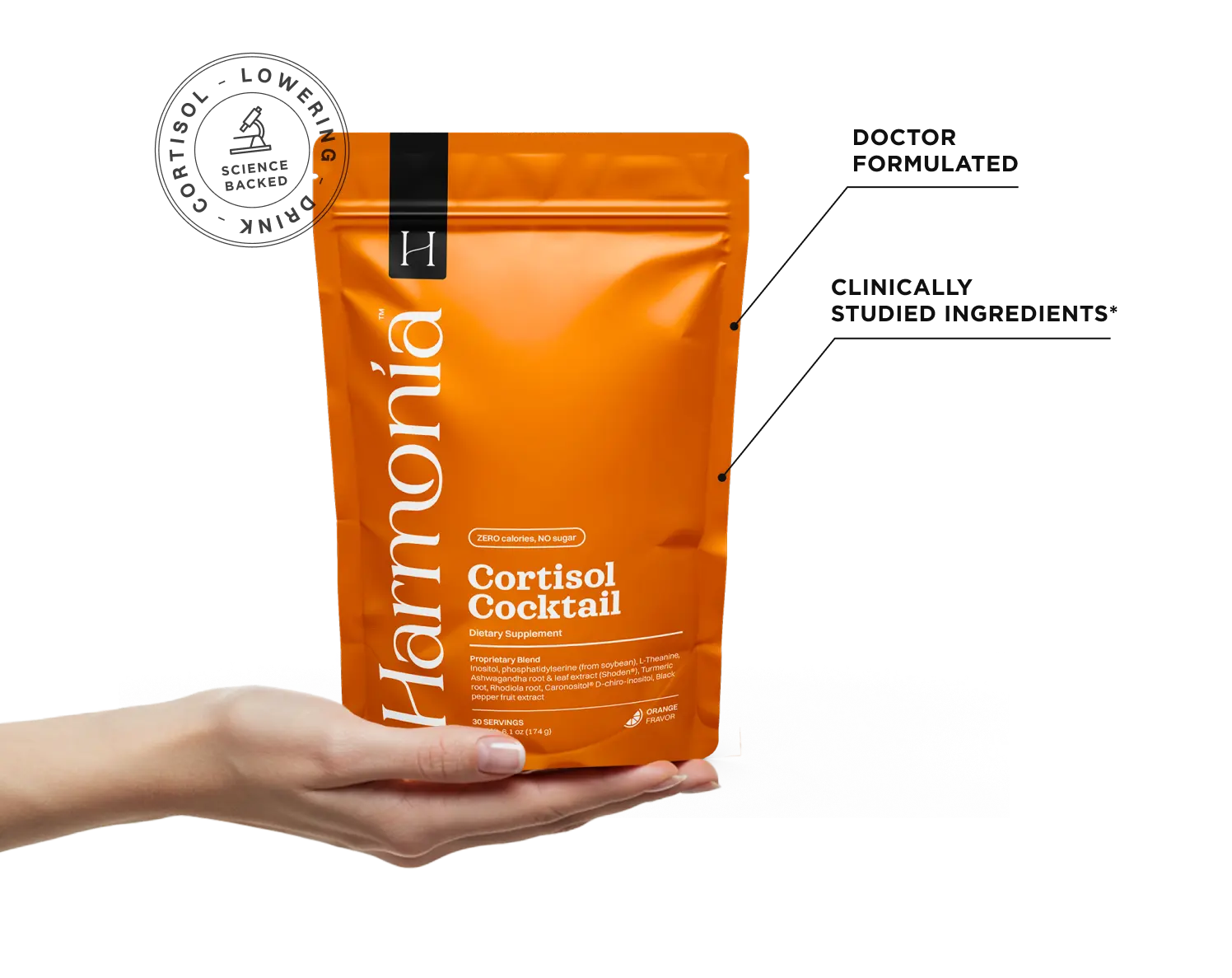
This is where a cortisol-focused approach can make a meaningful difference. Harmonia’s Cortisol Cocktail is designed as a daily support formula, combining ingredients like ashwagandha, rhodiola rosea, L-theanine, and myo-inositol to help regulate the body’s stress response.
By easing the cortisol load, it becomes easier for the body to shift out of fat-storage mode.
For women with PCOS, the cortisol-insulin connection makes things more complicated, since both hormones push in the same direction when it comes to weight loss with PCOS and body composition resistance.
How to Get Rid of Cortisol Belly: What Actually Works
Getting rid of cortisol belly fat requires a different approach than standard weight loss advice. Because the fat is hormonally driven, the most effective strategies target cortisol directly alongside diet and movement.
1. Address Sleep First
Sleep is the most powerful cortisol regulator you have access to without a prescription. When sleep quality drops, cortisol tends to rise the following day, making blood sugar harder to manage and increasing cravings for sugary, high-carb foods.
Left unchecked, this pattern quickly turns into a self-reinforcing cycle that can be difficult to break.
Aim for 7 to 9 hours in a dark, cool room with a consistent wake time, even on weekends. Same wake time every day. That single habit helps normalize the natural cortisol rhythm that your hormonal health depends on.

2. Stabilize Blood Sugar Rather Than Just Cut Calories
Aggressive calorie restriction adds physical stress to the body, which raises cortisol and speeds up muscle loss. That is the opposite of what you need.
A smarter approach is steadying your blood sugar: protein at every meal, plenty of fiber and healthy fats, and no long stretches without food during the day.
Including omega-3 rich foods like salmon, sardines, and walnuts also helps reduce the inflammation that cortisol-driven fat accumulation tends to create.
3. Choose Movement That Lowers Cortisol, Not Raises It
Hard daily training can make cortisol worse in women who are already sleep-deprived or chronically stressed. More is not always better.
Walking, yoga, swimming, and moderate strength training support fat loss and blood sugar without piling more stress onto an already strained system.
Aim for 30 to 45 minutes of moderate activity most days rather than exhausting daily sessions. Give your body a chance to recover.
4. Reduce Caffeine Strategically
Caffeine raises cortisol, especially when consumed on an empty stomach or repeated throughout the afternoon. If you are relying on three or four cups of coffee to push through fatigue, that pattern may be making cortisol worse, not better.
Keep caffeine in the morning and have it with food. That reduces how much it spikes your stress hormones, since caffeine and cortisol have a closer relationship than most people realize.
5. Use Adaptogenic Support Consistently
Adaptogenic herbs help your body handle stress more efficiently without shutting its response down entirely. They work with your system, not against it.
Ashwagandha is the most studied for cortisol reduction. Clinical meta-analyses show significant reductions in cortisol compared to placebo over four to eight weeks of consistent daily use.
Rhodiola Rosea helps with resilience to both physical and emotional pressure. Phosphatidylserine has been shown to blunt the cortisol spike that follows hard exercise and psychological stress.
None of these are overnight fixes. Four to eight weeks of daily use is where most people see meaningful changes. The pattern has to be consistent.
6. Reduce the Actual Stress Load
No amount of supplements or sleep optimization fully works if the underlying pressure never lets up.
Setting limits at work, reducing how many decisions you carry at once, and building genuine rest into your week are the upstream interventions that make everything else more effective.
Even ten minutes of intentional decompression daily, a short walk without your phone, slow breathing, or simply sitting quietly, can shift cortisol patterns measurably over time. Small decompression habits compound.

What About the Fat Pad at the Back of the Neck?
The classic cortisol hump location is the base of the neck and upper back. In severe clinical cases, this deposit is a recognized diagnostic feature. In milder, lifestyle-driven situations, the same area can accumulate fat without reaching any clinical threshold.
Women often notice increased roundness or firmness at the base of the neck, sometimes mistaken for muscle tension from posture.
The approach for reducing it is the same as for cortisol belly fat. Lower cortisol consistently over time. There is no shortcut that targets this spot specifically. Because the fat got there through a hormonal signal, the hormonal signal is what needs to change.
How Long Does It Take to See Results?
The honest answer is that it depends on how long cortisol has been elevated and how comprehensively you address it. Here is a realistic timeline based on what happens when sleep, nutrition, movement, and cortisol support are addressed together:
Progress depends on consistency and how many of these factors you address at the same time. Focusing on only one tends to produce slower results.
Supporting Your Body Through the Process
Getting rid of cortisol belly fat or reducing a cortisol hump is not about trying harder at what you are already doing. It is about addressing the right thing.
The hormonal signal that tells your body to store fat in those locations needs to change before the fat will shift.
That is where Harmonia Cortisol Cocktail fits in as a practical, daily addition to your routine. When sleep is improving, meals are more balanced, and movement is consistent, it helps reinforce those efforts by supporting steady cortisol regulation.
This added layer of support can make it easier for the body to move out of fat-storage mode.
For women navigating hormonal changes during perimenopause or menopause, this becomes even more important. As estrogen declines, the body often becomes more sensitive to stress signals, allowing cortisol to have a stronger influence on fat distribution.
Understanding how cortisol and menopause interact can help you take a more targeted, effective approach to supporting your body through this phase.
Conclusion
A cortisol hump is not a willpower problem. It is a physiological response to sustained hormonal imbalance, and it requires a hormonal solution.
Understanding the connection between cortisol and belly fat changes the entire approach. Instead of eating less and pushing harder, the focus shifts to restoring the conditions that let your body stop storing and start releasing fat.
Sleep, blood sugar stability, the right kind of movement, and consistent cortisol support all work together toward that goal.
The fat can shift. It just needs the right environment to do it.
Take the Harmonia quiz to find out whether cortisol could be driving your body composition changes and whether Harmonia is a good fit for where you are right now.
FAQs About the Cortisol Hump
What does a cortisol hump feel like?
A cortisol hump usually feels like a soft but slightly firm pad of fat at the base of the neck or upper back. It can be mildly tender and is often more noticeable from a side view. Unlike muscle tension, it feels more localized and less tight or spread out.
Can you lose a cortisol hump without medication?
Yes, if it is primarily driven by lifestyle-related stress rather than a medical condition. Consistent improvements in sleep, stress management, nutrition, and cortisol support can gradually reduce it over time.
If it grows quickly or comes with unusual symptoms, it is important to consult a doctor.
Is cortisol belly fat different from regular belly fat?
Yes, cortisol belly fat tends to sit deeper in the abdomen around the organs. It is more metabolically active and often more resistant to standard calorie restriction. Addressing the hormonal driver is key to reducing it effectively.
How do I know if my fat is from cortisol or diet?
Cortisol-related fat typically gathers around the midsection and upper back while arms and legs stay relatively lean. It often worsens during periods of high stress and responds poorly to typical dieting.
Ongoing fatigue, poor sleep, and strong carb cravings are common signs alongside it.
How long does it take to get rid of cortisol belly fat?
Early improvements in energy, sleep, and cravings often appear within two to four weeks. Visible changes in fat distribution usually follow around six to eight weeks.
More noticeable body composition shifts tend to happen over three to six months with consistent support.
References
- Bergthorsdottir, R., et al. (2014). Persistent central adiposity in patients with Cushing's syndrome in remission. Clinical Endocrinology. Link
- Westerbacka, J., et al. (2003). Body fat distribution and cortisol metabolism in healthy men. Journal of Clinical Endocrinology and Metabolism. Link
- U.S. National Library of Medicine. (2023). Cortisol test. MedlinePlus. Link
- Chandrasekhar, K., et al. (2012). A prospective, randomized double-blind, placebo-controlled study of safety and efficacy of ashwagandha root extract. Indian Journal of Psychological Medicine, 34(3), 255-262. Link