Anxiety has become one of the most common complaints in modern health conversations. In fact, nearly 9.1% of adults in the United States experienced an anxiety disorder within a 12-month period, making it one of the most frequently reported mental health conditions impacting daily life, work performance, and quality of sleep.
Many people are searching for natural options that calm the mind without causing drowsiness, dependence, or mental fog.
L-theanine is widely known for promoting relaxation while preserving alertness. Unlike sedatives that slow the nervous system dramatically, this amino acid works more subtly, helping the brain shift into a calmer state without impairing performance.
That distinction is important for people who need relief but still want to function at work, school, or home.
What Is L-theanine?
L-theanine is a naturally occurring amino acid most commonly found in green tea leaves. It is one of the compounds responsible for the unique calm focus many people report after drinking tea.
While caffeine in tea provides mild stimulation, L-theanine smooths out that stimulation, preventing jitteriness and sharp spikes in alertness.
Chemically, L-theanine is structurally similar to glutamate, a neurotransmitter in the brain. This similarity allows it to influence several pathways involved in stress, mood, and cognitive function. Importantly, it crosses the blood-brain barrier, meaning it can directly affect brain chemistry.
Unlike many anti-anxiety supplements that primarily cause sedation, L-theanine promotes what researchers often call “relaxed alertness.” This makes it appealing for individuals who want to reduce nervous tension without feeling slowed down or sleepy.
How L-theanine Works in the Brain
L-theanine influences multiple neurotransmitters associated with mood and stress regulation. It has been shown to increase levels of:
- GABA, the primary calming neurotransmitter
- Dopamine, linked to motivation and reward
- Serotonin, associated with emotional balance
In addition, L-theanine promotes the production of alpha brain waves, which are commonly observed during states of calm focus, meditation, and creative flow. Alpha waves represent a state where the mind is relaxed but not disengaged.
This neurological profile explains why L-theanine is often described as calming without sedation. Instead of “turning off” the brain, it helps regulate overactivity.
For individuals experiencing racing thoughts or tension-driven anxiety, this effect can feel noticeable and supportive.
L-theanine Benefits for Anxiety and Stress

When people search for L-theanine, they are typically hoping for measurable improvements in emotional steadiness and stress resilience. Several documented L-theanine benefits directly relate to these concerns.
1. Promotes Calm Without Drowsiness
One of the most significant advantages of L-theanine is that it supports relaxation without impairing mental clarity. Many anti-anxiety medications and even some natural remedies can cause fatigue or reduced cognitive sharpness. L-theanine, in contrast, allows users to remain productive.
This is particularly beneficial for professionals, students, and individuals who must perform under pressure. Anxiety often peaks during high-demand situations, and the ability to stay composed without losing focus is a major advantage.
Because it does not strongly suppress the central nervous system, L-theanine is generally considered safe for daytime use. That makes it versatile compared to heavier calming compounds.
2. Supports Emotional Stability
Chronic stress can lead to irritability, mood swings, and emotional reactivity. L-theanine’s influence on serotonin and dopamine may help smooth these fluctuations.
When neurotransmitters are more balanced, emotional triggers may feel less intense. Many users report feeling less “on edge” and better able to respond calmly to stressors rather than reacting impulsively.
This subtle stabilizing effect can be particularly helpful when anxiety manifests as tension, frustration, or overwhelm rather than panic.
3. Improves Focus During Stress
Anxiety often disrupts concentration. Racing thoughts and intrusive worries consume cognitive bandwidth, leaving little room for productive thinking.
By promoting alpha brain wave activity, L-theanine may help reduce mental chatter. This allows attention to shift back toward tasks and responsibilities. Some studies suggest improvements in attention-switching and task accuracy when L-theanine is used alongside mild caffeine.
For individuals who experience stress-related distraction, this cognitive support is one of the most practical benefits.
4. May Improve Sleep Quality
Although L-theanine is not a sedative, it may indirectly improve sleep by calming pre-sleep anxiety. Difficulty falling asleep is often driven by overthinking rather than a lack of physical tiredness.
By promoting relaxation and reducing mental tension, L-theanine can make it easier to transition into sleep. Better sleep, in turn, supports improved emotional regulation the following day.
Sleep and anxiety are tightly connected. Addressing one often improves the other, and L-theanine can contribute to that positive cycle.
What Does Research Say About L-theanine for Anxiety?
Clinical research on L-theanine suggests measurable effects on stress perception and physiological stress markers. Several studies have examined doses ranging from 100 to 400 mg per day, observing reductions in subjective stress and improvements in relaxation.
Research exploring L-theanine dose for anxiety commonly finds that 200 mg produces noticeable calming effects within 30–60 minutes. Some participants also demonstrate reduced heart rate and improved stress recovery after acute stress exposure.
Other studies show that regular supplementation over several weeks may improve sleep quality and reduce baseline anxiety levels. While the evidence is not as extensive as pharmaceutical trials, it is promising enough to support cautious optimism.
Importantly, L-theanine appears to have a strong safety profile. Side effects are rare and typically mild, which contributes to its popularity as a first-line natural option.
L-theanine vs Other Anxiety Supplements
Choosing the right anxiety support often comes down to understanding how each ingredient works and what type of stress it targets. Some supplements act quickly on brain chemistry, while others build long-term resilience by supporting stress hormones or nervous system balance.
The table below compares L-theanine with several commonly used anxiety-support ingredients to clarify their primary mechanisms, strengths, and ideal use cases.
When L-theanine Alone May Not Be Enough
While L-theanine can be effective for mild to moderate anxiety, it may not fully address deeper stress imbalances. Anxiety is rarely driven by a single factor.
Contributors may include:
- Chronic stress
- Hormone elevation
- Sleep disruption
- Blood sugar instability
- Lifestyle overload
In these cases, supporting only one pathway may produce limited results.
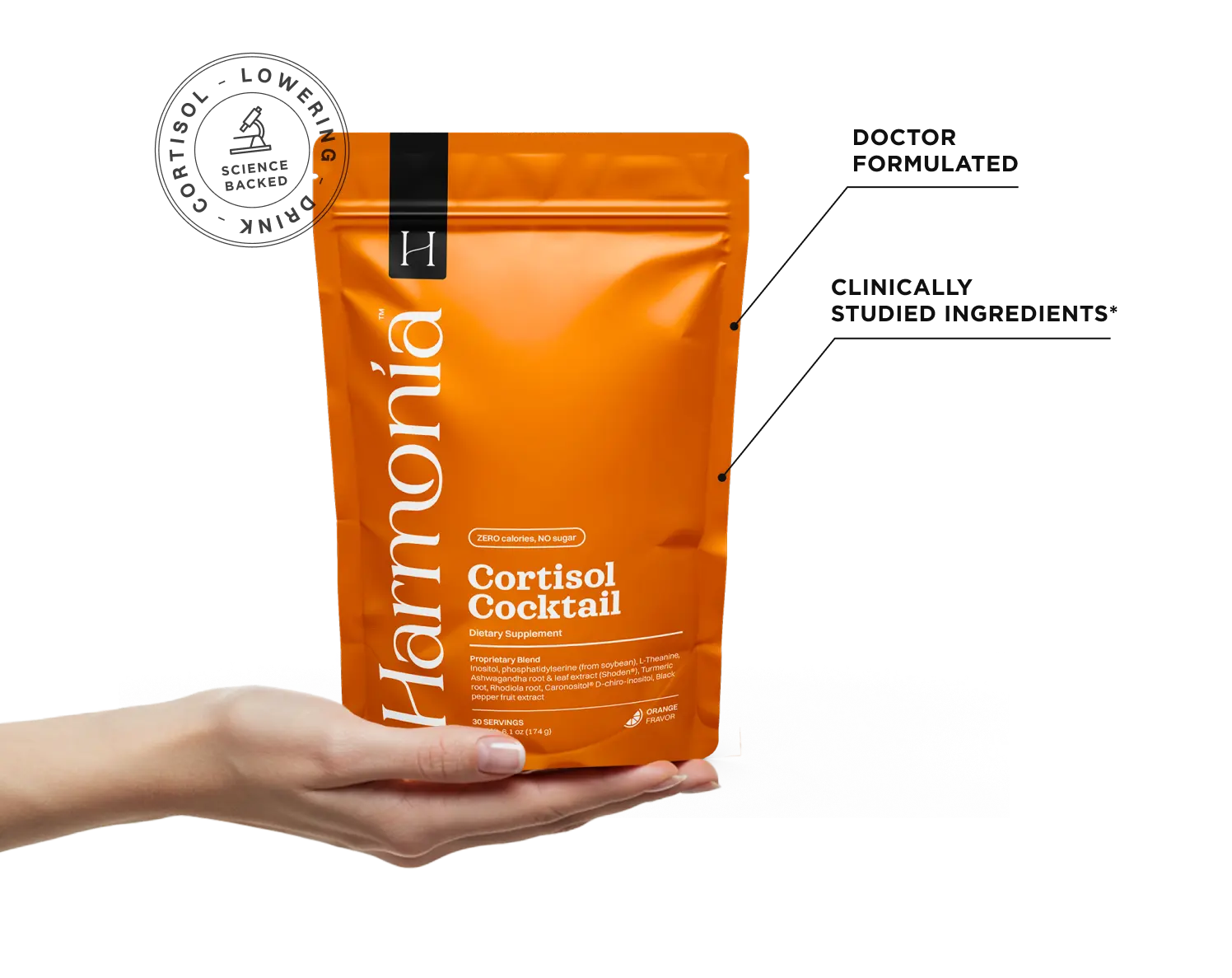
Harmonia combine L-theanine with adaptogens, phosphatidylserine, magnesium, B vitamins, and additional stress-regulating nutrients. Rather than targeting just neurotransmitters, this formula supports multiple systems simultaneously.
A broader approach may be particularly helpful for individuals who experience anxiety alongside fatigue, mood swings, or restless sleep.
Who Can Benefit Most from L-theanine Anxiety Support?

L-theanine may be especially helpful for individuals experiencing:
- Work-related stress
- Performance anxiety
- Mild generalized anxiety
- Caffeine sensitivity
- Stress-related sleep difficulty
Those with high-demand schedules often appreciate its ability to calm without sedation. Students, entrepreneurs, and shift workers may find it particularly useful.
People seeking a gentle introduction to natural anxiety support may also benefit. Because of its favorable safety profile, L-theanine is often one of the first supplements explored.
However, severe anxiety or panic disorders may require professional medical guidance. Natural supplements can support, but not replace, comprehensive care when symptoms are significant.
Practical Ways to Maximize L-theanine Benefits
Supplementation works best when paired with supportive daily habits. Anxiety reduction is rarely about a single pill or drink. L-theanine can enhance calm and focus, but its effects are amplified when your nervous system is supported consistently through sleep, nutrition, and stress regulation practices.
Rather than relying solely on supplementation, think of L-theanine as one tool within a broader strategy. When lifestyle factors align with biochemical support, results tend to feel more stable and sustainable.
Here are practical ways to maximize L-theanine benefits:
Maintain Consistent Sleep Timing
Going to bed and waking up at similar times each day strengthens circadian rhythm regulation. A well-regulated sleep cycle improves emotional resilience and allows L-theanine’s calming effects to work more efficiently.
Balance blood sugar with regular meals
Skipping meals or eating high-sugar foods can trigger blood sugar crashes that mimic anxiety symptoms such as shakiness, irritability, and brain fog. Balanced meals with protein, fiber, and healthy fats create steadier energy.
Reduce Excessive Caffeine Intake
While L-theanine can smooth out caffeine’s stimulating effects, very high caffeine intake may still override its calming properties. Moderation allows the amino acid to perform optimally.
Use L-theanine Strategically
Taking it before high-stress events, work presentations, or bedtime (if racing thoughts are present) can improve its practical impact. Timing matters.
Pair With Adaptogens When Needed
For chronic stress patterns, combining L-theanine with adaptogens like ashwagandha or rhodiola may provide broader stress resilience rather than short-term calm alone.
Incorporate Daily Nervous System Resets
Breathwork, light movement, sunlight exposure, and short breaks during the day send safety signals to the brain. Supplementation works best when the body is not constantly in fight-or-flight mode.
The key is consistency. Benefits often compound when healthy routines reinforce biochemical support.
Over time, this integrated approach helps build a calmer, more resilient stress response rather than temporary relief.
Final Verdict
The evidence suggests that L-theanine can meaningfully support anxiety reduction, particularly for mild to moderate stress. It promotes calm without sedation, improves focus under pressure, and may enhance sleep quality.
It is not a cure-all. Anxiety is multifactorial, and some individuals will require broader lifestyle or medical support. Still, as part of a balanced approach, L-theanine offers a practical and well-tolerated option.
Take control of your stress response instead of letting it control you. Explore how targeted support like Harmonia can help you build calmer days, better sleep, and steadier focus - starting now.
References
- Any anxiety disorder. (s. f.). National Institute Of Mental Health (NIMH). Link.
- Cotter, J., Caddick, C. E., Harper, J. L., & Ebajemito, J. K. (2025). Examining the effect of L-theanine on sleep: a systematic review of dietary supplementation trials. Nutritional Neuroscience, 1-15. Link.
- Payne, E. R., Aceves-Martins, M., Dubost, J., Greyling, A., & de Roos, B. (2025). Effects of tea (Camellia sinensis) or its bioactive compounds l-theanine or l-theanine plus caffeine on cognition, sleep, and mood in healthy participants: A systematic review and meta-analysis of randomized controlled trials. Nutrition reviews, 83(10), 1873-1891. Link.
- Sakamoto, F. L., Ribeiro, R. M. P., Bueno, A. A., & Santos, H. O. (2019). Psychotropic effects of L-theanine and its clinical properties: From the management of anxiety and stress to a potential use in schizophrenia. Pharmacological research, 147, 104395. Link.
- Williams, J. L., Everett, J. M., D’Cunha, N. M., Sergi, D., Georgousopoulou, E. N., Keegan, R. J., ... & Naumovski, N. (2020). The effects of green tea amino acid L-theanine consumption on the ability to manage stress and anxiety levels: a systematic review. Plant foods for human nutrition, 75(1), 12-23. Link.